


Syllabus: GS2/IR
Context
- Prime Minister Modi lands for the first bilateral visit by an Indian Prime Minister to Norway after 43 years.
Key Highlights of the Meet
- Green Strategic Partnership: India and Norway formally declared the upgrade of bilateral ties to a Green Strategic Partnership to ensure increased collaboration in sectors ranging from Clean Energy to Climate Resilience, Blue economy to green shipping.
- Norway Joins Indo-Pacific Oceans Initiative (IPOI): Norway formally joined India’s IPOI framework (launched 2019), which promotes a free, open, and rules-based Indo-Pacific.
- Triangular Cooperation Agreement: India and Norway will jointly offer India’s Digital Public Infrastructure (DPI) (the Aadhaar-UPI-CoWIN stack) to countries of the Global South.
- Diplomatic Outcomes: Norway reaffirmed support for India’s permanent seat in a reformed UN Security Council.
- PM Modi awarded the Grand Cross of the Royal Norwegian Order of Merit by King Harald V, Norway’s highest civilian honour for foreign heads of government.
- Agreements Signed: To strengthen cooperation in areas of clean energy, offshore wind, sustainability, geosciences, and academic collaboration.
Norway
- Norway is a narrow country in northern Europe. It shares the Scandinavian Peninsula with Sweden and Finland.
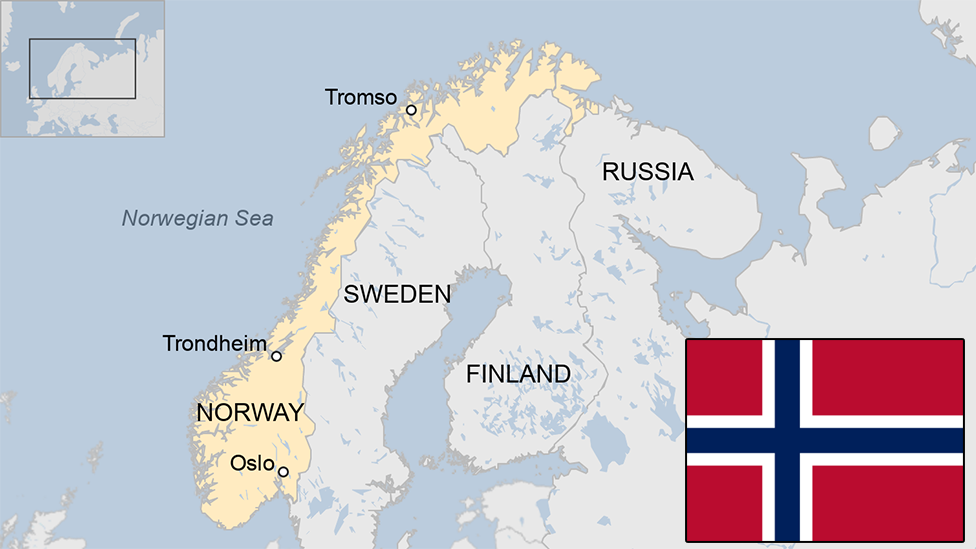
- Norway’s coastline is famous for its fjords (fyords), which are sea inlets between steep cliffs. The fjords were carved out by glaciers, as were the country’s mountains.
- Although not in the EU, Norway is part of the European Economic Area and a member of NATO.
- The biggest source of national income is the extraction and export of offshore oil and gas.
Brief on India – Norway Bilateral Ties
- India and Norway established bilateral relations in 1947.
- The India-Nordic Summit format allowed more regular and structured interactions at Prime Ministerial levels.
- The first summit was held in 2018 at Stockholm.
- The Joint Commission Meeting (JCM) between the Foreign Ministers is the high level mechanism of coordination between the two countries, covering the entire gamut of relations.
- Norway has been supporting India’s perusal to become a permanent member of a reformed UN Security Council.
- Bilateral Trade: It was US $ 1.05 billion in 2024-25 and India exported goods worth US$ 630 million and imported goods worth US$ 420 million.
- Trade in services has been around USD 1 billion.
- India and the European Free Trade Association (EFTA) which includes Norway, Switzerland, Iceland and Liechtenstein, signed a Trade and Economic Partnership Agreement (TEPA) in 2024.
- Investment: The Government Pension Fund Global (GPFG) of Norway has invested close to US$ 28 billion (till 2025) in the Indian capital market.
- In addition, FDI inflows from Norway during 2000 to 2025 was US$ 764 million.
- Arctic/ Polar: India set up its first permanent research station ‘Himadri’ in the Arctic in 2008 at Svalbard, Norway.
- The National Centre for Polar and Ocean Research (NCPOR) carries out multiple scientific expeditions to the Arctic every year.
- India has also been an Observer State in the Arctic Council since 2013.
- Space: ISRO uses Norway’s Svalbard ground station on commercial terms to receive data from IRS satellites.
- KSAT is also setting up ISRO’s antenna in Svalbard.
Significance of Norway for India
- Maritime and Blue Economy Cooperation: Norway is a global leader in shipping, fisheries, offshore energy, and ocean management.
- India can benefit from Norwegian expertise in sustainable ocean governance, port modernization, and marine technology.
- Energy Security: Norway is one of the world’s major exporters of crude oil and natural gas.
- As India’s energy demand rises, Norway can serve as a stable and reliable partner for diversification of energy imports.
- Economic and Investment Relations: Norway is an important investor in India through sectors such as renewable energy, logistics, maritime services, and technology.
- The Norwegian Government Pension Fund Global is among the world’s largest sovereign wealth funds with investments in Indian companies.
- India–EFTA Trade Agreement: The Trade and Economic Partnership Agreement (TEPA) signed with India in 2024 is expected to enhance trade, investments, and technology transfer.
- Arctic Cooperation: Norway is strategically important for India’s Arctic policy. India cooperates with Norway in Arctic research, climate studies, polar science, and sustainable development in the Arctic region.
- Strategic Importance in Europe: Norway’s location in Northern Europe and the Arctic region gives India strategic access to emerging geopolitical and trade routes in the North Atlantic and Arctic areas.
Conclusion
- Norway is an important partner for India in areas such as maritime cooperation, renewable energy, Arctic research, climate action, trade, and sustainable development.
- Strengthening India–Norway relations can support India’s economic growth, green transition, and strategic engagement in the Arctic and European regions.
Source: TH
Previous article
MoSPI’s Framework for India’s Knowledge Economy
Next article
Change in Citizenship Rules
